

コンテンツ ホーム 1-1 1-2 1-3 1-4 1-5 1-6 1-7 注意事項
第1部 伝熱工学の基礎
第1章 伝熱工学の概要
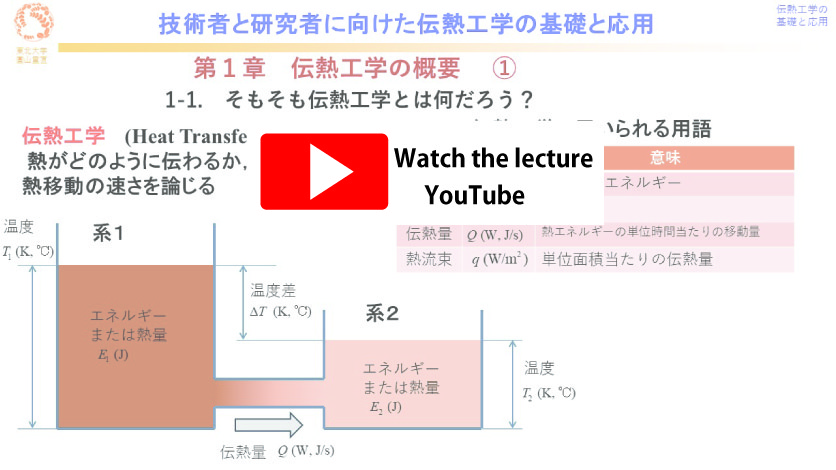
■1-1 伝熱工学の概要① 伝熱工学とは何だろう?
https://youtu.be/Mc4YJmVz1Gk?si=6P5rrhmN68YKhpxy
概要
レクシャーシリーズ伝熱工学の基礎と応用です。「伝熱とは何だろう」を考えます。熱力学は熱の移動速度は論じませんが、伝熱工学では、熱移動の速さを論じます。伝熱工学は非平衡状態で熱移動を扱う学術領域であり、流体の移動を議論する流体力学と類似です。Let’s consider the question, “What is heat transfer?” Heat transfer is an academic field that deals with the transfer rate of heat under non-equilibrium conditions, and is similar to fluid mechanics, which deals with the movement of fluids.
YouTube 2026年7月8日配信
配信資料ダウンロード(PDF)
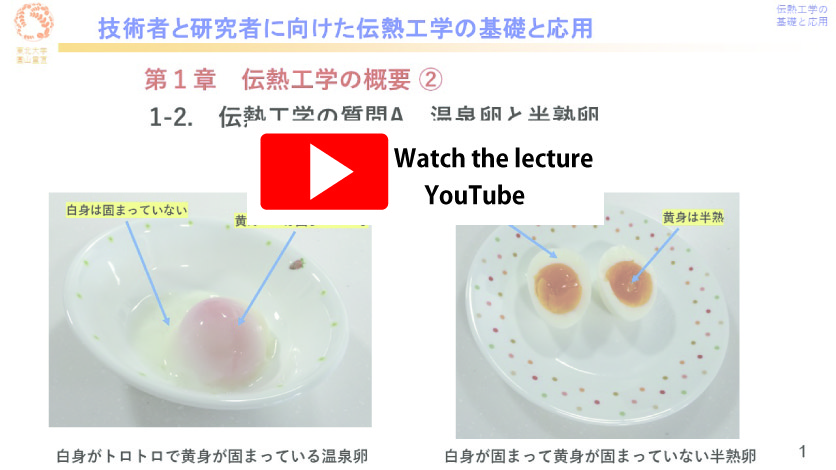
■1-2 伝熱工学の概要② 温泉卵と半熟卵
https://youtu.be/JRNWWo9hnhc?si=4crUV731w7Xks4sk
概要
レクシャーシリーズ伝熱工学の基礎と応用です。伝熱工学の質問として、温泉卵と半熟卵の違いについて考えます。2つの卵の違いは、加熱方法による非定常熱伝導が関わっています。Let’s consider the difference between “hot-spring eggs” and “soft-boiled eggs.” In hot-spring eggs, the yolk sets while the white does not set. In soft-boiled eggs, the white sets, but the yolk remains runny. This is due to “transient heat conduction” resulting from the heating method.
YouTube 2026年7月8日配信
配信資料ダウンロード(PDF)
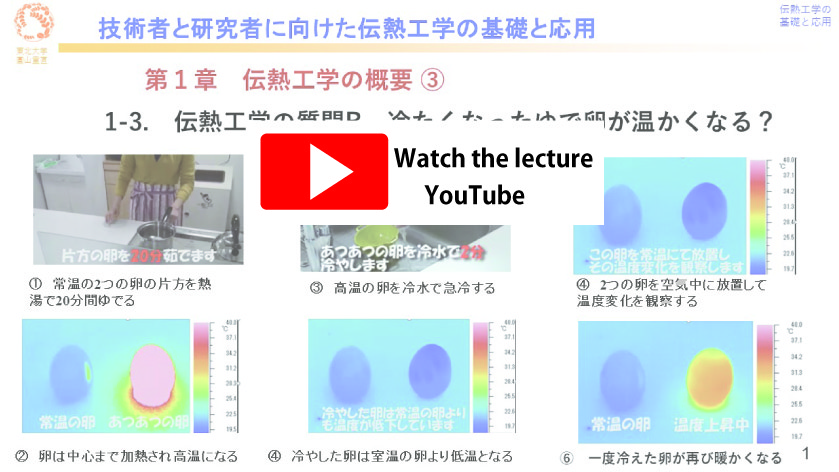
■1-3 伝熱工学の概要③冷たいゆで卵が温かくなる?
https://youtu.be/spTrALix8uQ?si=_4HLH78wJqQFx5A-
概要
レクシャーシリーズ伝熱工学の基礎と応用です。熱湯で加熱したゆで卵を冷水で冷やした後で放置すると、ゆで卵が再び熱くなる現象を考えます。これは、非定常熱伝導と対流熱伝達が作用して、このような現象が起きるのです。Consider the phenomenon where a hard-boiled egg, after being cooled in cold water, becomes hot again. This phenomenon occurs due to the combined effects of transient heat conduction and convective heat transfer.
YouTube 2026年7月8日配信
配信資料ダウンロード(PDF)
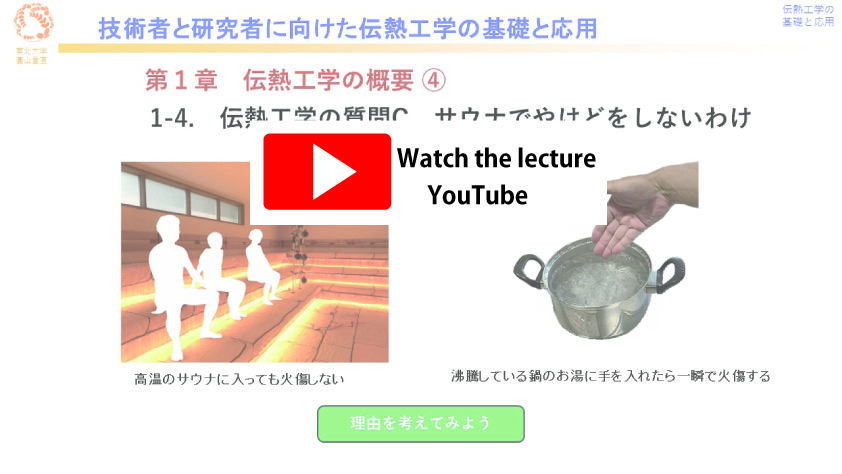
■1-4 伝熱工学の概要④サウナに入っても火傷をしないわけ
https://youtu.be/jMkwfM41rhs?si=CgS49FxHk022aO2P
概要
レクシャーシリーズ伝熱工学の基礎と応用です。 100℃のお湯に手を入れると大やけどを負いますが,100℃のサウナに入ってもやけどをしないのはなぜでしょうか。これは、2つの物体の非定常熱伝導問題です。If you put your hand in water at 100°C, you’ll suffer severe burns, but you don’t get burned when you enter a sauna at 100°C? Why? This is an example of “transient heat conduction” between two objects.
YouTube 2026年7月8日配信
配信資料ダウンロード(PDF)
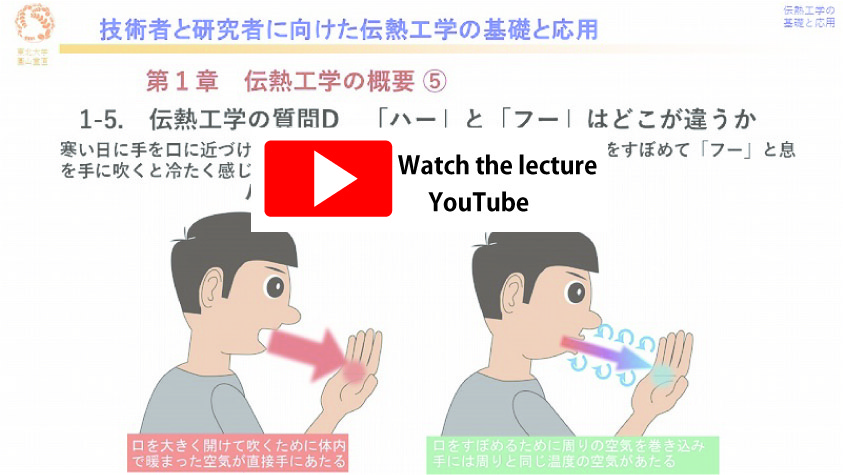
■1-5 伝熱工学の概要⑤ 「ハー」と「フー」はどこが違うか
https://youtu.be/L8y8HkxDDLg
概要
レクシャーシリーズ伝熱工学の基礎と応用です。寒い日に手を口に近づけて「ハー」と息を吹くと温かく感じますが、口をすぼめて「フー」と息を手に吹くと冷たく感じるのはなぜでしょうか。この現象には、噴流の流れと、対流熱伝達の境界層や熱伝達率が関わっています。On a cold day, if you hold your hands near your mouth and blow out a “haa,” they feel warm, but if you purse your lips and blow a “fuu” onto your hands, they feel cold. Why is that? This phenomenon is related to the boundary layer and heat transfer coefficient involved in convective heat transfer.
YouTube 2026年7月15日配信
配信資料ダウンロード(PDF)
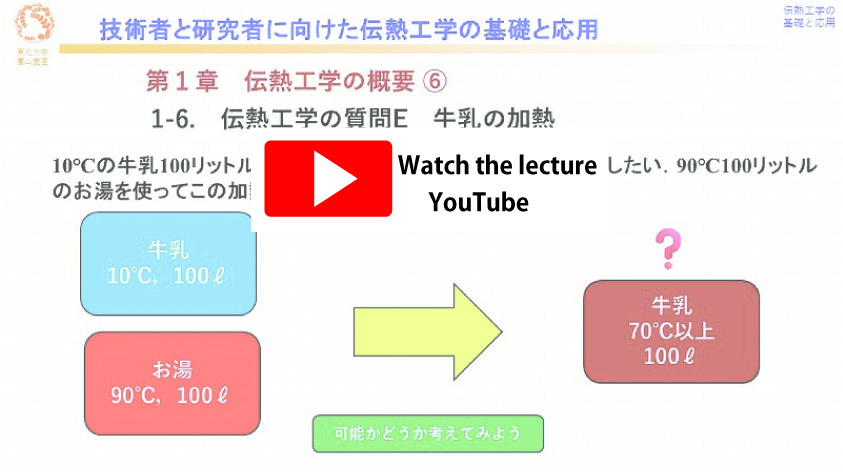
■1-6 伝熱工学の概要⑥ 牛乳の加熱
https://youtu.be/IxsEyMDW9Ik
概要
レクシャーシリーズ伝熱工学の基礎と応用です。90℃のお湯を使って、同量の10℃の牛乳を70℃以上に加熱できるでしょうか。熱力学では、牛乳は50℃以上になりません。しかし、高温流体と低温流体が逆方向に流れて熱交換をする、向流型熱交換器を使用すると、牛乳の温度を90℃近傍まで加熱することが可能となります。Is it possible to heat 100 liters of milk at 10°C to over 70°C using 100 liters of hot water at 90°C? According to thermodynamics, the milk will not exceed 50°C.However, it is possible by using a “counter-flow heat exchanger”
YouTube 2026年8月5日配信
配信資料ダウンロード(PDF)
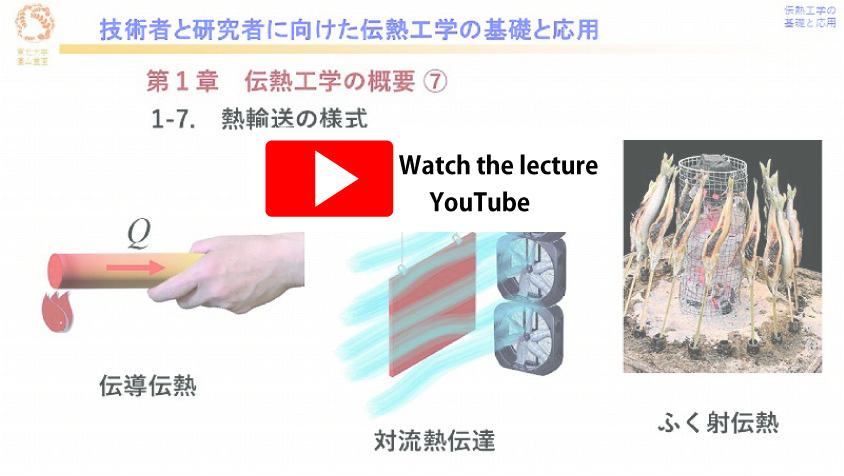
■1-7 伝熱工学の概要⑦ 熱輸送の様式
https://youtu.be/OMX6LNtzslw
概要
レクシャーシリーズ伝熱工学の基礎と応用です。伝熱工学の概要の最終回として、熱輸送の様式についてまとめました。伝熱現象としては、熱伝導、対流、熱ふく射があり、それらの熱輸送様式として、伝導伝熱、対流熱伝達、ふく射伝熱、があります。The phenomena of heat transfer include thermal conduction, convection, and thermal radiation, and the corresponding modes of heat transfer are conductive heat transfer, convective heat transfer, and radiative heat transfer.
YouTube 2026年8月19日配信
配信資料ダウンロード(PDF)
本レポート使用の注意事項
当ホームページは社会貢献の一環、伝熱工学の発展のため公開しています
工学の基礎、発展のために参考にして頂ければ幸甚で。