In next-generation transport systems and energy plants, it is crucial to rationally manage degradation and damage to structural materials induced by fluid flow. This research field focuses on sensing and monitoring technologies that contribute to enhancing the reliability of these systems. We are developing material degradation and damage assessment methods using electromagnetic non-destructive evaluation techniques and acoustic emission (AE) methods, alongside high-temperature environment sensors, aiming to apply these to online monitoring. Additionally, we are conducting research on high-reliability sensing through the fusion of diverse sensors and on inverse problem approaches. To conduct this research more effectively, we collaborate with researchers in the fields of materials science and data science.
• Hydrogen embrittlement monitoring ・水素脆化評価 • High-pressure hydrogen systems ・高圧水素機器 • Corrosion and material degradation ・腐食・材料劣化 • High-temperature components ・高温機器
Next-Generation Manufacturing & Data-Driven NDT 次世代ものづくり・データ駆動型NDT • NDE of additively manufactured metals ・AM材の非破壊評価 • Defect detection in AM components ・欠陥検出 • Digital twin for structural integrity ・デジタルツイン • Machine learning for NDT ・機械学習応用
Eddy current testing (ECT) 渦電流試験
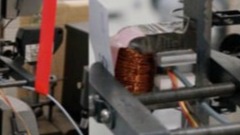
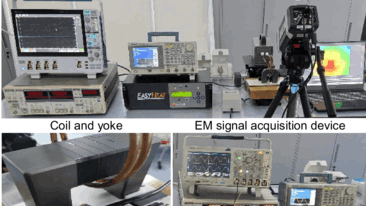
Eddy current testing (ECT) is a non-destructive testing method used to detect and evaluate surface and internal defects without damaging the test object. An alternating current is applied to a coil to generate a magnetic field, which induces eddy currents in the test specimen. When a defect alters the flow of the eddy currents, the impedance of the coil and its output signal change. These changes can be used to evaluate the presence of defects and the condition of the test specimen.
Defects Detection of Composite Materials (CFRP, CMC) Using Eddy Current Testing 複合材料(CFRP,CMC)に対する渦電流試験(ECT)
Eddy current defects detection of lightweight composite materials with excellent mechanical properties are increasingly being used in aircraft, automobiles, and other applications. In particular, carbon fiber-reinforced plastics (CFRP), which offer high specific strength and specific modulus, are used in aircraft fuselages and wings, while ceramic matrix composites (CMCs), which have excellent heat resistance, are used in aircraft engines. Since the fibers used in these materials are electrically conductive, defects within the materials can be detected using eddy current testing (ECT). This method aims to improve the reliability of composites material inspection.
Evaluation of Hydrogen Embrittlement and Nitriding Using Eddy Current Testing複合材渦電流試験による水素脆化や窒化の評価
Hydrogen embrittlement and nitriding can degrade the mechanical properties of metallic materials, leading to component failure and reduced service life. Changes in the material microstructure can also affect its magnetic and electrical properties. This study investigates the relationship between microstructural changes and electromagnetic properties, such as magnetic permeability and electrical conductivity, and aims to develop a nondestructive evaluation method using eddy current testing (ECT).
What is UT?A probe sends high-frequency sound waves into a material. The waves bounce back from flaws and from the back wall. From the timing and strength of these echoes, we can find hidden flaws and measure thickness without damaging the part.
What is AE?When a material deforms or cracks, part of its stored energy is released as elastic waves. Sensors on the surface detect these waves, so damage inside the material can be monitored in real time without breaking it.
Hydrogen is a promising clean energy, but it can make metals brittle (hydrogen embrittlement). This also happens in stainless steels used in hydrogen equipment, and the mechanism is still unclear.
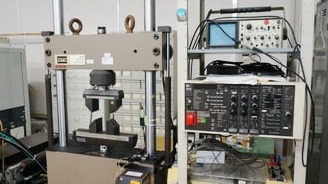
Steel specimens (AISI 304) with and without hydrogen are slowly pulled until they break, while AE sensors record signals from inside. We compare the amplitude, waveform and frequency of the signals.
To identify what happens inside the steel (dislocation motion, microcracking, phase transformation) from AE signals, and to clarify how damage caused by hydrogen embrittlement progresses.
What is the Eddy Current Magnetic Signature method (EC-MS)? In the EC-MS method, two eddy currents with different frequencies are simultaneously applied to the material. As a result, two varying magnetic fields with different frequencies are generated. Under the influence of these magnetic fields, the magnetic flux lines inside the material are distributed as shown in the figure, and the Hysteresis curve also takes the shape shown in the figure. The short black lines in the figure each represent the Magnetic Incremental Permeability (MIP).
渦電流磁気指紋法(EC-MS)とは?EC-MS法ではさらに、材料に対して異なる2つの周波数の渦電流を同時に印加します。これにより、異なる2つの周波数の変動磁場が発生します。これらの磁場の影響により、材料内部の磁束線は図に示すような分布となり、ヒステリシス曲線も図のような形状になります。図中の黒い短線は、それぞれ増分透磁率(MIP: Magnetic Incremental Permeability)を表しています。
Eddy Current Magnetic Signature: ECMS Method
渦電流磁気指紋法
When the impedance changes of the material to which two eddy currents with different frequencies are simultaneously applied are plotted on the complex plane, a trajectory as shown in the figure is obtained. The shape of this fingerprint differs depending on the type and condition of the material, and each fingerprint uniquely corresponds to the stress state of the material. In addition, the EC-MS method has very high sensitivity to the stress state. The EC-MS method can be used as a method for detecting and evaluating internal damage in materials under stress.