
 Laboratory
 Research
 Joint research
- TOP
- Laboratory
- Introduction
Introduction
Introduction
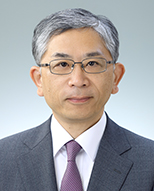
Institute of Fluid Science DirectorTakehiko Sato
Since its establishment in 1943 as the Institute of High Speed Mechanics, the Institute of Fluid Science has advanced academic research based on fluid flow science, contributing to the development of science and technology in Japan. In 1989, it was reorganized as the Institute of Fluid Science, and has since pursued its mission: to establish new scientific theories, develop practical solutions to various problems faced by society, and foster young researchers and engineers who can work at international standards, by promoting world-class basic research in fluid science and related inter-disciplinary areas, and their application in priority science and technological areas.
Our research spans a wide range of fields, including environment and energy, biomedical engineering, nanotechnology, and aerospace. We have developed into a research hub that advances both fundamental understanding and practical applications of “flow” across a broad range of spatiotemporal scales, from macroscopic flows of gases, liquids, and solids to microscopic flows at the molecular and atomic levels. These research activities are supported by 32 research laboratories (including visiting research laboratories) across three divisions and two centers, as well as by the utilization of our world-class research infrastructure, such as supercomputers, low-turbulence heat transfer wind tunnels, and shock wave-related facilities. In addition, they are strengthened through collaboration with researchers in Japan and abroad under our Joint Usage/Research Center framework. Our international collaborations extend widely, including partnerships with institutions such as the Université de Lyon in France, contributing not only to joint research but also to the development of young researchers.
In response to evolving societal needs, the Institute has continuously restructured its research organizations. The Shock Wave Research Center, once a world-leading center in shock wave research, was reorganized and expanded to establish the Research Center for Fluid Fusion in 2003. It was subsequently transformed into the Advanced Institute for Materials Research in Energy in 2013, and further reorganized in 2022 into the Global Collaborative Research and Education Center for Integrated Flow Science. This center not only strengthens our research and education capabilities but also promotes research that directly contributes to solving societal challenges. Among these efforts, research on ammonia as a fuel is one of our key initiatives, thereby leading international efforts and advancing new technological foundations toward the realization of a decarbonized society.
At present, as Tohoku University embarks on a new phase as a University for International Research Excellence, we have established the “International Center for Zero-Carbon Innovative Manufacturing Processes” in fiscal year 2026. With the primary aim of realizing a decarbonized society, this center promotes an integrated approach from fundamental research to application and social implementation. As part of its foundational activities, it is also working to build a research ecosystem while establishing a research framework in collaboration with internationally distinguished faculty on advanced plasma, heat, and mass transport control technologies. Furthermore, we are expanding our activities with a view toward collaboration with the planned CREATE Site in Singapore.
Finally, one of the Institute’s greatest strengths lies in its interdisciplinary and international research environment. Through collaboration with the University’s cutting-edge research infrastructure, including NanoTerasu, and through the organization of international conferences, we will further enhance our role as a global hub for the circulation of knowledge, attracting outstanding researchers from around the world. We are committed to fostering and sustaining an environment in which our most important asset—people—can pursue research with pride and motivation, and where new value is created through open and dynamic discussions.
We sincerely appreciate your continued support and cooperation.
April, 2026